
A 0th law for the 21st century
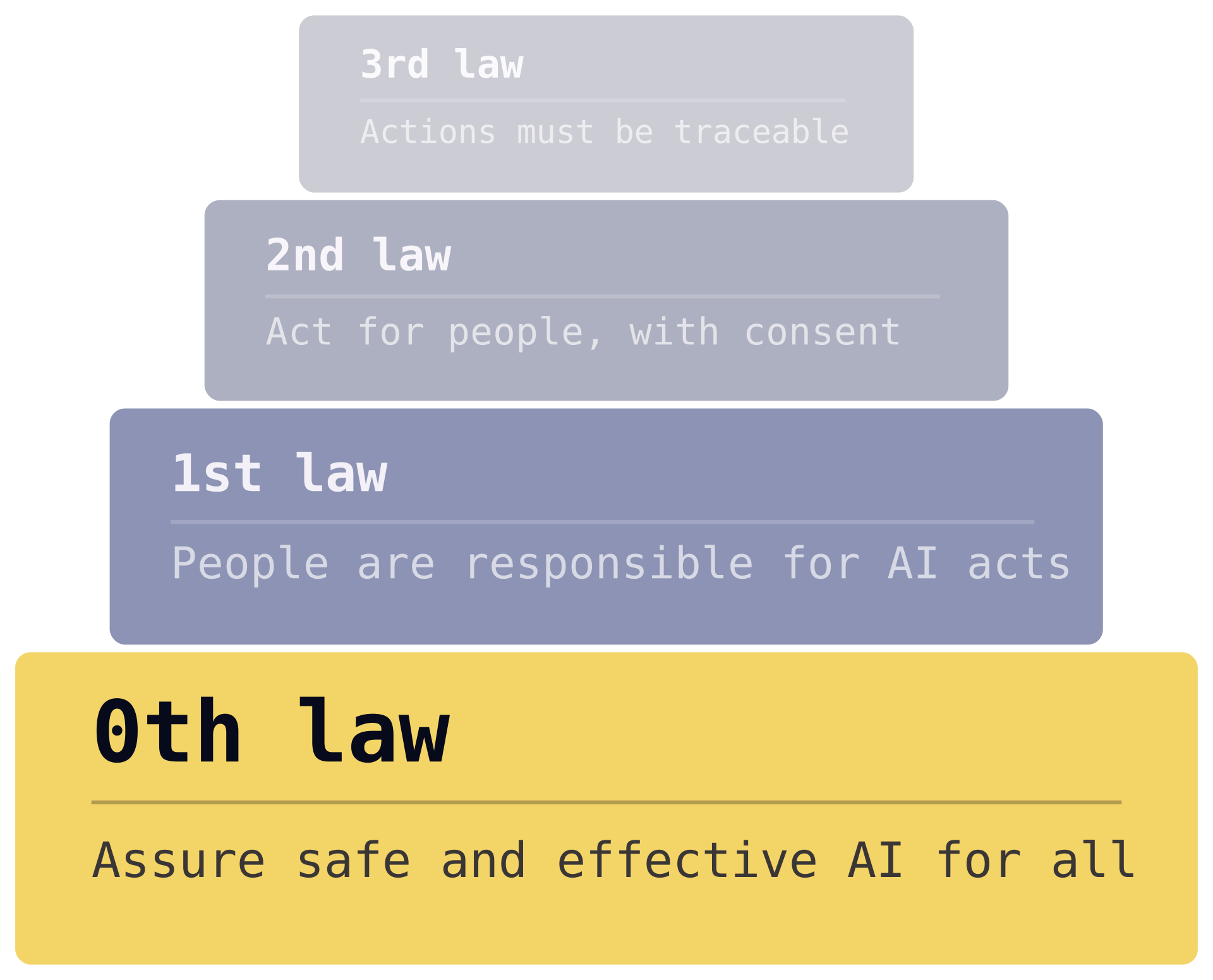
In 1942, Asimov devised three laws of robot safety as a thought experiment before AI or robots were real. As his stories explored their application and encountered their limitation, he added a more foundational, 0th law: robots must not harm humanity.
Now we have real AI systems with the potential to dramatically improve societal outcomes if we can figure out how to let them work safely, reliably and independently. We need new, foundational laws for this era of real AI.
That's the mission of 0th law.
The AI opportunity for societal good is not hypothetical
For example in healthcare, AI has the potential to prevent 1/3 of ALL deaths in the USA caused by heart disease.
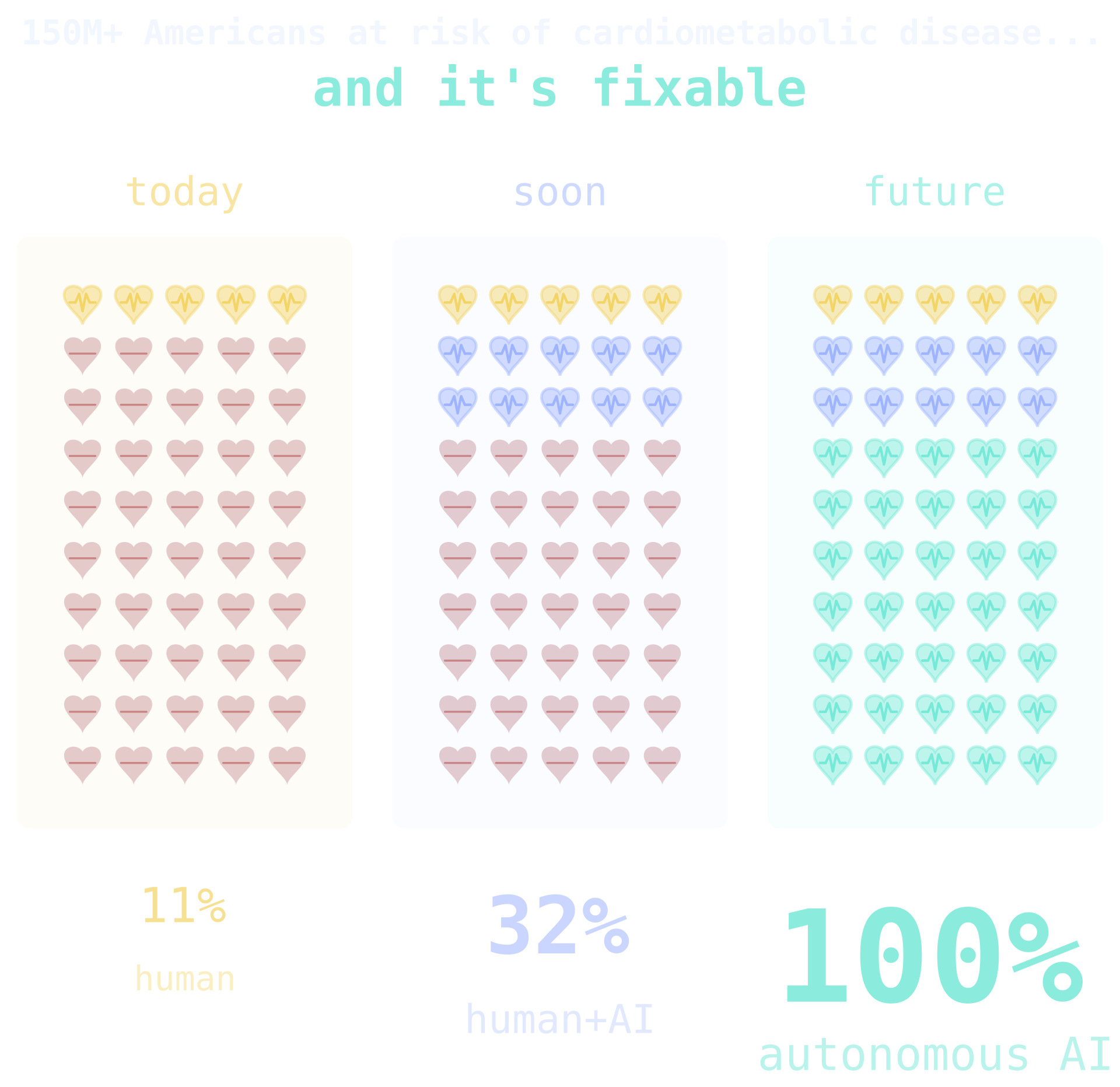
Preventative Nutrition
Medical-grade AI nutritionists for low-cost, augmentative disease prevention services.
- • Cardiovascular events: 1 in 3 US deaths
- • 1 in 3 Americans at risk of diabetes
- • ~28% of cases preventable via nutrition
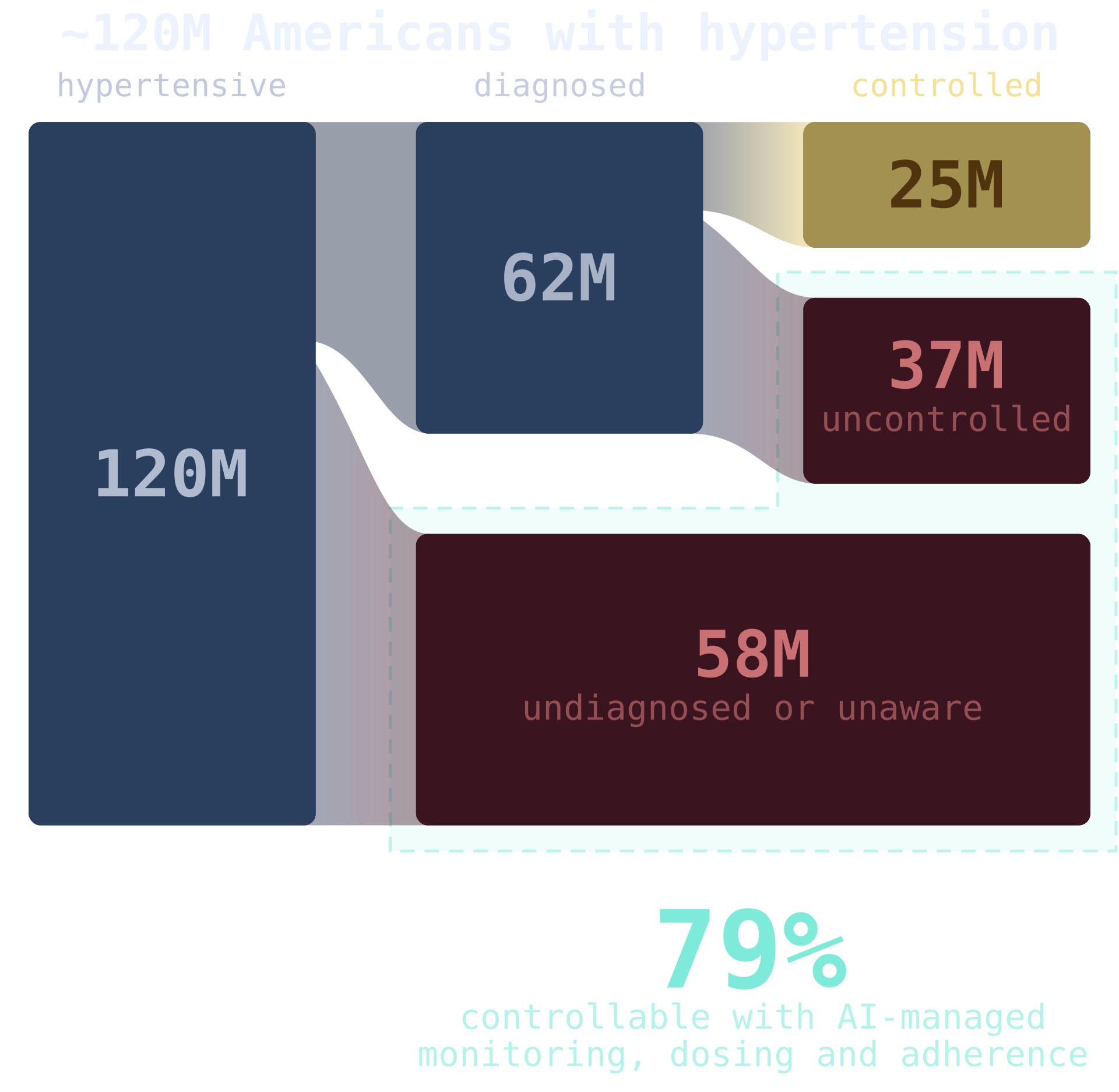
Hypertension Control
Autonomous AI-driven anti-hypertensive adherence and dosing optimization.
- • 1 in 8 deaths associated with hypertension
- • Proper medication can reduce 40% of strokes
- • Only 20% of patients effectively control BP
Why don't we already have these systems?
AI has the potential to improve health outcomes by providing better care to more people at lower costs. But significant barriers remain:

AI developers don't have ways to easily and reliably test their systems in deployment. In highly regulated settings like healthcare, patient data is protected by HIPAA and the access, aggregation and annotation of real data is often limited to research and care delivery settings.

Healthcare systems can't trust existing AI benchmarks without running their own evaluations. Very few AI benchmarks are real, unexposed and provide enough coverage to be reliable especially for the wide range of healthcare uses of AI.

No one will insure these systems if they operate autonomously. Use of AI in healthcare to human-in-the-loop system until there is a track record of trust and reliability that enables licensure and indemnity.
The result: AI systems are costly to deploy and their deployments greatly limit their potential capability.
Our Approach
We develop predictive evaluation methods for critical applications: rapid, automated model testing that statistically predicts deployment outcomes.


Real tasks, real data
Evaluation data from real cases and real tasks, curated and scored by trusted standards organizations.
Predictive evaluation of AI models
Low cost, high speed evaluation via dynamic, AI-driven interaction that reliably predicts deployment outcomes.
Post-deployment monitoring
Pre-testing coupled to post-deployment outcomes that drive empirical models of performance and improved testing.
Who Benefits

AI Users
Access to more and higher quality care and services at lower costs.

AI Developers
Cheap and repeatable evaluation enables iterative development of better, safer models.

AI Deployers
Accurate assessment of risk/reward prior to deployment avoids costly pilots.

Insurers & Regulators
Reliable testing allows standards for deployment and, coupled with risk modeling, enables new insurance products.